Friday, March 2, 2012
Not a Pilot?
Lost your medical? We can send you out with an instructor who’ll sit “right seat”. You can use a C-182, a C-210, a PC-12 – whatever suits the size of your party. You’ll have the plane at your disposal. You can go to any of the same places. You’ll have the same comfortable lodges and the same encounter in the African wilds. The instructor won’t carry your bags but there are plenty of staff around to do that.
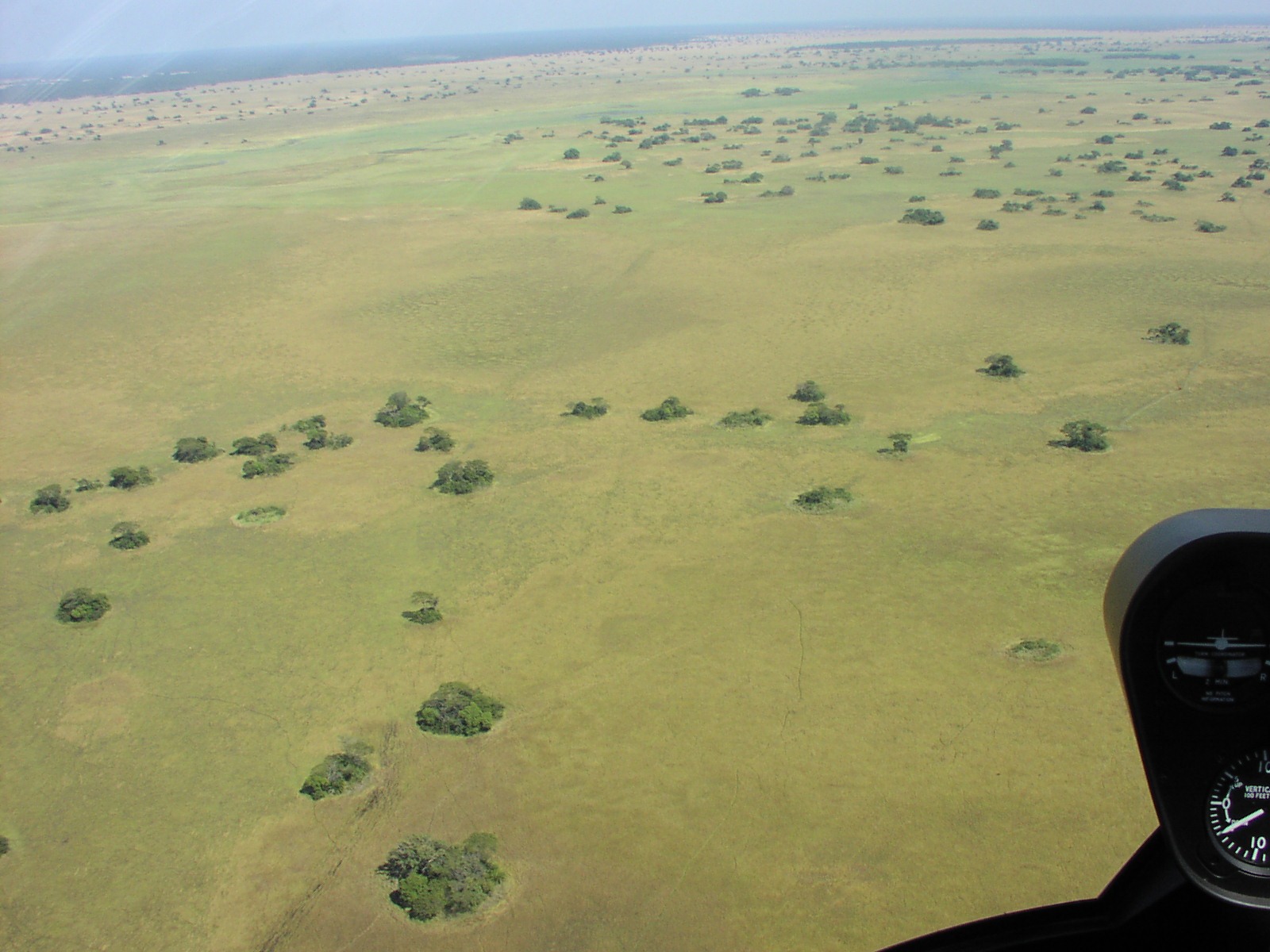
Piloting a plane over the wilds of Africa is a great experience! Christina and I flew from the USA to Europe and south through Africa 15 years ago. Along the way it became clear that pilots of all nationalities would love this sort of flying. Getting dust on your wheels and landing on bush airstrips was rewarding enough. But the icing on the cake were the lodges we found! These places can be hundreds of miles from the nearest town. Yet when you land you are escorted into stunningly attractive African-style camps. There are dozens of staff to pour you drinks and cook up meals that you’d expect only from the fine restaurants. The accommodations are roomy and comfortable with hot running water, flush toilets fresh linen and comfortable beds. The game rangers know the area and track even the most elusive of Africa’s great game. If you tire of the game drives, just stay at the lodge for a morning. At some places you can get a massage! Most lodges have swimming pools and a few have private plunge pools at each chalet.
Last year’s Botswana tour was documented by German TV (ARD). Watch it online at http://mediathek.daserste.de/sendungen_a-z/894524_weltreisen/8025650_safari-in-afrika. On the right is a small box labeled “Mediathek”. Click on that to play the video. Another box, just below, will take you to the websites of the lodges where the group stayed. The sound track is in German with voiceovers of the American pilots. If you don't speak German the visuals tell you all you need to know. The photography is beautiful and the production gives a flavor of the animals, the flying, the comfort and luxury of the lodges - and the fun! The crew put cameras on the wings, under the belly, in the cockpit and at the lodges. One of the ladies was in tears over the sight of Victoria Falls. “It was on my bucket list”, she said. Other great moments captured on this self-fly safari are close encounters with elephants and lions. They can’t be planned, but they happen!
Wednesday, February 16, 2011
November safari?
I plan to be in South Africa on business in November. Can I fly a short safari then?
Validation: We give pilots a chance to recover from jetlag, which accounts for a delay in getting started. We can compress the program to a certain degree, particularly if you are rested. For example, the handling and cross-country check can be combined into a single flight. Remember also, the license you receive from the CAA is good for five years. If you managed to return within the validity period you would only have to fly three “circuits” with an instructor to get the plane signed out again. The validation exercises are private pilot standards. There are no trick questions or anything like that. It’s all pretty straight forward.
Scheduling: If you spent some of the time while in Johannesburg focused on the validation exercises then, when your condo sharing period finishes, you could take off immediately for a brief Self-Fly Safari. In this four or five-day period you could, conceivably, fly to two separate lodges. We think it is a good idea to spend at least two nights at each destination. Three nights is preferable as you get a chance to relax and enjoy the lodge itself as well as getting out for several more game drives.
If you are planning a November safari you do need to be mindful of possible weather issues. In designing a route I would keep the legs short – no more than two hours – so that you could get in and out with a relatively small window of opportunity. For example a flight from Lanseria (Johannesburg) to Limpopo Valley in Botswana is 240nm or about two hours flying. As well as it being a fairly short flight, November is not a high-occupancy period at some lodges. Hence, you could call the night before or that morning to determine if the lodge had space for you. In this way you could avoid losing your money on lost bookings. Lodges typically have a “use it or lose it” policy.
Validation: We give pilots a chance to recover from jetlag, which accounts for a delay in getting started. We can compress the program to a certain degree, particularly if you are rested. For example, the handling and cross-country check can be combined into a single flight. Remember also, the license you receive from the CAA is good for five years. If you managed to return within the validity period you would only have to fly three “circuits” with an instructor to get the plane signed out again. The validation exercises are private pilot standards. There are no trick questions or anything like that. It’s all pretty straight forward.
Scheduling: If you spent some of the time while in Johannesburg focused on the validation exercises then, when your condo sharing period finishes, you could take off immediately for a brief Self-Fly Safari. In this four or five-day period you could, conceivably, fly to two separate lodges. We think it is a good idea to spend at least two nights at each destination. Three nights is preferable as you get a chance to relax and enjoy the lodge itself as well as getting out for several more game drives.
If you are planning a November safari you do need to be mindful of possible weather issues. In designing a route I would keep the legs short – no more than two hours – so that you could get in and out with a relatively small window of opportunity. For example a flight from Lanseria (Johannesburg) to Limpopo Valley in Botswana is 240nm or about two hours flying. As well as it being a fairly short flight, November is not a high-occupancy period at some lodges. Hence, you could call the night before or that morning to determine if the lodge had space for you. In this way you could avoid losing your money on lost bookings. Lodges typically have a “use it or lose it” policy.
Saturday, June 19, 2010
Lanseria comes of age
The FIFA World Cup games have brought pressures on Lanseria Airport (FALA). From a free-wheeling scene of legitimate civil aviation, gray government and military operations to outright smuggling, Lanseria has turned into a full service, first-class international field used by African heads of state, celebrities like John Travolta flying a classic Boeing 707, to American Vice President Joe Biden in Air Force 2(now a Boeing 757).
Visits by foreign dignitaries are really demanding on any nation's resources and patience. Air Force 2 could have landed at Johannesburg’s O.R Tambo International airport (FAJS)or the South African military base at Waterkloof (FAWK), near Pretoria. But the route planners, whoever they are for the American Vice president, decided Biden would fly into to Lanseria. Lanseria management, which asserts the airfield is “secure”, got a taste of what US authorities regard as secure. Toes were stepped on.
In the weeks before Biden’s arrival at least three different US Air Force C-17’s flew in. Kulula.com’s green and white 737’s had been the biggest aircraft regularly seen on Lanseria's terminal apron. Now they were dwarfed by the gray Cargomasters. Tractors and other vehicles drove in and out of the plane’s belly unloading timber, generators, cargo and people. After one landing, the four-engine jet took off for a 54 mile flight to Pilanesburg (FAPN) – the airport for the Sun City resort with its gambling casino and entertainment complex. Vice President Biden was expected to attend the USA – England at soccer game and, presumably, the Cargomaster delivered logistic and support material for the Vice presidential visit at the stadium nearby at Rustenburg. It delivered its cargo and returned to Lanseria in a few hours. Two short hops for a monster four-engine jet aircraft.
When Biden himself arrived in country, Lanseria airspace was closed to all other traffic. Normally, closed airspace is reserved for heads-of-state only. Nonetheless, as a courtesy to the American’s, ATC closed Lanseria airspace for the arrival. Any other arriving aircraft were diverted or ordered to hold well away from the area. Lanseria's perimeter road was closed and patrolled specially for the arrival. The balcony at the airport’s restaurant, which overlooks the ramp and runway, was closed to diners. Uniformed and plain-clothes South African police and American Secret Service personnel occupied the balcony. The terminal lobby was crowded but many were wearing Lanseria ID badges and yellow reflective jackets. Others wore dark suits, dark glasses, with an earpiece snaking under their jackets – all the earmarks of Secret Service personnel. Embarking passengers were heavily outnumbered. Just as well, no other private or commercial planes were boarding or pushing back.
Looking west from the terminal to the Air traffic Control Tower, people stood on the Tower roof. This was a new twist. Tower personnel sometimes stand on the outside walkway when having a smoke break or taking a private phone call but not on the roof. Inside the tower were more of the dark-suited Secret Service personnel. That was a concession to the USA. The US insisted on snipers on top of the tower and marksmen were there. But they were South African special forces people, not Americans. That was a concession to the South Africans. Also present were a group of US Navy Seals in full combat regalia. ‘Trust but verify’ is the old Reagan phrase that comes to mind in this scene. Also in tower was an Austrian military guy. He was there on account of his prior experience policing the 2006 FIFA games in Germany. His job was to help distinguish the good guys from the bad if they threatened anything on and above the airfield. There were no incidents of any kind during Biden’s visit.
Lanseria’s regular security management, which took back seat when the Americans came in, had their noses bent out of shape. Conceding authority and having their own rules ignored is not their cup of tea. Later, they called the Americans “rude”. Really, it was just a US demonstration of how command & control is done -- a simple show of raw power.
Lanseria had come from a freewheeling airfield to one able to assure the US government and FIFA that security would be at the highest level. General aviation pilots should feel comfortable at lanseria.
Visits by foreign dignitaries are really demanding on any nation's resources and patience. Air Force 2 could have landed at Johannesburg’s O.R Tambo International airport (FAJS)or the South African military base at Waterkloof (FAWK), near Pretoria. But the route planners, whoever they are for the American Vice president, decided Biden would fly into to Lanseria. Lanseria management, which asserts the airfield is “secure”, got a taste of what US authorities regard as secure. Toes were stepped on.
In the weeks before Biden’s arrival at least three different US Air Force C-17’s flew in. Kulula.com’s green and white 737’s had been the biggest aircraft regularly seen on Lanseria's terminal apron. Now they were dwarfed by the gray Cargomasters. Tractors and other vehicles drove in and out of the plane’s belly unloading timber, generators, cargo and people. After one landing, the four-engine jet took off for a 54 mile flight to Pilanesburg (FAPN) – the airport for the Sun City resort with its gambling casino and entertainment complex. Vice President Biden was expected to attend the USA – England at soccer game and, presumably, the Cargomaster delivered logistic and support material for the Vice presidential visit at the stadium nearby at Rustenburg. It delivered its cargo and returned to Lanseria in a few hours. Two short hops for a monster four-engine jet aircraft.
When Biden himself arrived in country, Lanseria airspace was closed to all other traffic. Normally, closed airspace is reserved for heads-of-state only. Nonetheless, as a courtesy to the American’s, ATC closed Lanseria airspace for the arrival. Any other arriving aircraft were diverted or ordered to hold well away from the area. Lanseria's perimeter road was closed and patrolled specially for the arrival. The balcony at the airport’s restaurant, which overlooks the ramp and runway, was closed to diners. Uniformed and plain-clothes South African police and American Secret Service personnel occupied the balcony. The terminal lobby was crowded but many were wearing Lanseria ID badges and yellow reflective jackets. Others wore dark suits, dark glasses, with an earpiece snaking under their jackets – all the earmarks of Secret Service personnel. Embarking passengers were heavily outnumbered. Just as well, no other private or commercial planes were boarding or pushing back.
Looking west from the terminal to the Air traffic Control Tower, people stood on the Tower roof. This was a new twist. Tower personnel sometimes stand on the outside walkway when having a smoke break or taking a private phone call but not on the roof. Inside the tower were more of the dark-suited Secret Service personnel. That was a concession to the USA. The US insisted on snipers on top of the tower and marksmen were there. But they were South African special forces people, not Americans. That was a concession to the South Africans. Also present were a group of US Navy Seals in full combat regalia. ‘Trust but verify’ is the old Reagan phrase that comes to mind in this scene. Also in tower was an Austrian military guy. He was there on account of his prior experience policing the 2006 FIFA games in Germany. His job was to help distinguish the good guys from the bad if they threatened anything on and above the airfield. There were no incidents of any kind during Biden’s visit.
Lanseria’s regular security management, which took back seat when the Americans came in, had their noses bent out of shape. Conceding authority and having their own rules ignored is not their cup of tea. Later, they called the Americans “rude”. Really, it was just a US demonstration of how command & control is done -- a simple show of raw power.
Lanseria had come from a freewheeling airfield to one able to assure the US government and FIFA that security would be at the highest level. General aviation pilots should feel comfortable at lanseria.
Sunday, April 4, 2010
The Hong Kong crew gets going
It was a long rainy day from 5:30 when I got up and heard the drops on the thatch roof. The bridge was flooded. We pulled in to the airport at 7:15. The HK crew had just arrived and we had breakfast together. Their scheduled circuits (at 8AM as a check out for the 172) couldn’t be flown. The restaurant was crowded because all the Kalula flights were delayed. Service was lousy with the crowd but the waitresses and the kitchen were working hard. One B-737 did a missed approach trying to get in but came back around and made it in the second time. Conditions were a constant drizzle that sometimes turned into a hard rain. As the morning progressed conditions moved between VMC and IMC but always a mist and low scud moving over the field.
The plane the HK crew will take is out on an IMC flight (!?) and returned during an improvement in weather. It was not supposed to be and the FBO screwed up by letting it go. It delayed the checkout and cost the crew a chance to get out during one of the breaks. By the time they got the plane fueled and loaded the weather had closed in again. We got them permission to go out “special VFR” but they were last in line behind any and all IF traffic coming or going from Lanseria. The weather was good west of Jo’burg. They waited at the holding point more than a half hour and things finally went below minimums again.
They taxied over to the terminal and shut down and went back to the restaurant. We met them there and spent the next three hours waiting for a break. Wings Restaurant is a poor place to spend three hours. After one order everything else seems less appetizing.
Tower had graciously extended their flight plan for the rest of the say. At 3PM the crew set out to go. We went to the tower to watch and wait. They waited at the holding point and finally got off at 3:40PM. They got to Vryburg by 5:30. I called fuel at Vryburg and the guy was there. Chancy though, as it was Good Friday and a public holiday in South Africa.
Not only that, but the lodge wouldn't get off their chairs to pick up the crew once they got there. They finally gave me a number to call for a pickup (R50) to bring therm to the lodge. No report yet on what they found when they got there.
The plane the HK crew will take is out on an IMC flight (!?) and returned during an improvement in weather. It was not supposed to be and the FBO screwed up by letting it go. It delayed the checkout and cost the crew a chance to get out during one of the breaks. By the time they got the plane fueled and loaded the weather had closed in again. We got them permission to go out “special VFR” but they were last in line behind any and all IF traffic coming or going from Lanseria. The weather was good west of Jo’burg. They waited at the holding point more than a half hour and things finally went below minimums again.
They taxied over to the terminal and shut down and went back to the restaurant. We met them there and spent the next three hours waiting for a break. Wings Restaurant is a poor place to spend three hours. After one order everything else seems less appetizing.
Tower had graciously extended their flight plan for the rest of the say. At 3PM the crew set out to go. We went to the tower to watch and wait. They waited at the holding point and finally got off at 3:40PM. They got to Vryburg by 5:30. I called fuel at Vryburg and the guy was there. Chancy though, as it was Good Friday and a public holiday in South Africa.
Not only that, but the lodge wouldn't get off their chairs to pick up the crew once they got there. They finally gave me a number to call for a pickup (R50) to bring therm to the lodge. No report yet on what they found when they got there.
Tuesday, February 16, 2010
I want to do a self-fly safari during the World Cup Soccer games
You’ll have to do the normal validation program. See the attached. You should try to be in South Africa before the games get underway to accomplish this. In addition to normal flight procedures in South Africa, there will be a few new wrinkles. There is a 50 nm exclusion zone centered on each stadium. These include Johannesburg, Rustenburg, Durban, Nelspruit, Cape Town.
Pilots need 1) a personal security clearance number from the air force. I don’t know the specific screening procedure but it needs to be done there in South Africa. 2) for each flight you will need the normal flight plan AND also a flight authorization from the air force. You get this from the air force liaison officer at each airport before departure. 3) Your FAA license needs to be authenticated by the South African CAA before they issue your validated license. 4) When you reach the 50-nm exclusion zone, you call a frequency and request clearance to enter. With all of the above in order you should be able to approach and land. 5) Arrival and departure slots are required for IFR traffic. VFR traffic does not require slot reservations. However, VFR flights take a back seat to scheduled IFR traffic. This is always the case and not unique to the 2010 games. However, in normal times, we regularly encounter 10 – 45 minute delays approaching Lanseria.
Lanseria: You’ll need transport to and from the airport to your accommodation. Car rental or private taxi is available at Lanseria.
Here are some specific thoughts on each of the legs you are looking at.
Johannesburg, Lanseria (FALA) – Rustenburg (FARG): It’s a 20 minute flight (40 nm). Rustenburg is a small, single-runway airfield. Aircraft parking will be at a premium. Transport from Rustenburg airfield to the stadium is problematic. You can drive from Johannesburg to rustenburg in 1½ hours. Private automobile traffic to all stadia is prohibited. People with tickets assemble at a staging area. You are taken to the stadium in buses and public transport. After the match the same public transport gets you back to the assembly points from where you make your own way. The transport issue will be the same at each soccer venue.
Lanseria – Nelspruit (FANS) or Kruger/Mpumalanga (FAKN): 164nm. This route descends the “Drakensburg escarpment”. Johannesburg is in the area known as the “highveld” and Nelspruit is in the area known as the “lowveld”. The “Lowveld” is the region of South Africa’s best game viewing. The Drakensburg Mountains stand between Johannesburg at +/- 5000’ msl and Nelspruit at 1200’ msl. Warm, tropical air from the Indian Ocean can be orographically lifted causing low level fog and clouds along the mountain range. Tops can be at 10,000 feet or higher. Cold fronts can produce similarly poor flying conditions along the Drakensburg range. VFR flights can be impossible for two, sometimes three days. You face the prospect crossing each way.
Lanseria to Durban (FAVG): 283 nm. Call it 2½ hours. You are descending +/- 5000 feet to the Indian Ocean coast. Winter weather (June) is usually CAVOK on the high, inland plateau (Highveld) where Johannesburg is located because of a static, seasonal high pressure area over southern Africa.
Coastal weather: Storms blow in from the Atlantic on South Africa’s west coast making VFR flying a hit or miss proposition. Cold fronts that normally peter-out in the highland areas often remain strong as they sweep east along lower, coastal elevations. These fronts are characterized by rain, wind and IMC conditions. While Durban and the Indian Ocean coast in Kwazulu/Natal province is typically warm, balmy and tropical in June, the region is not immune from adverse frontal weather.
Durban (FAVG) – Cape Town (FACT or FASB): Distance is 682 nm including a necessary fuel stop that we suggest at Graaf Reinet (FAGR). In a C-182, that’s 5.7 hours with a 1 to 1½ hour turnaround time, for a total of at least seven hours enroute. Coastal weather can delay the leg; headwinds can extend the enroute time. It is one of the shortest days of the year with sunset near 5 PM.
Flying small aircraft in VFR conditions on a tight schedule to reach World Cup Soccer Games spread around South Africa is likely to cause you to miss matches. Remember the adage ‘Time to spare? Go by air’. If you’re determined to get to World Cup games you are best served by going commercial carrier, railway, or renting an automobile and driving from city to city.
Come do a self-fly safari in Africa when the crowds are gone.
Pilots need 1) a personal security clearance number from the air force. I don’t know the specific screening procedure but it needs to be done there in South Africa. 2) for each flight you will need the normal flight plan AND also a flight authorization from the air force. You get this from the air force liaison officer at each airport before departure. 3) Your FAA license needs to be authenticated by the South African CAA before they issue your validated license. 4) When you reach the 50-nm exclusion zone, you call a frequency and request clearance to enter. With all of the above in order you should be able to approach and land. 5) Arrival and departure slots are required for IFR traffic. VFR traffic does not require slot reservations. However, VFR flights take a back seat to scheduled IFR traffic. This is always the case and not unique to the 2010 games. However, in normal times, we regularly encounter 10 – 45 minute delays approaching Lanseria.
Lanseria: You’ll need transport to and from the airport to your accommodation. Car rental or private taxi is available at Lanseria.
Here are some specific thoughts on each of the legs you are looking at.
Johannesburg, Lanseria (FALA) – Rustenburg (FARG): It’s a 20 minute flight (40 nm). Rustenburg is a small, single-runway airfield. Aircraft parking will be at a premium. Transport from Rustenburg airfield to the stadium is problematic. You can drive from Johannesburg to rustenburg in 1½ hours. Private automobile traffic to all stadia is prohibited. People with tickets assemble at a staging area. You are taken to the stadium in buses and public transport. After the match the same public transport gets you back to the assembly points from where you make your own way. The transport issue will be the same at each soccer venue.
Lanseria – Nelspruit (FANS) or Kruger/Mpumalanga (FAKN): 164nm. This route descends the “Drakensburg escarpment”. Johannesburg is in the area known as the “highveld” and Nelspruit is in the area known as the “lowveld”. The “Lowveld” is the region of South Africa’s best game viewing. The Drakensburg Mountains stand between Johannesburg at +/- 5000’ msl and Nelspruit at 1200’ msl. Warm, tropical air from the Indian Ocean can be orographically lifted causing low level fog and clouds along the mountain range. Tops can be at 10,000 feet or higher. Cold fronts can produce similarly poor flying conditions along the Drakensburg range. VFR flights can be impossible for two, sometimes three days. You face the prospect crossing each way.
Lanseria to Durban (FAVG): 283 nm. Call it 2½ hours. You are descending +/- 5000 feet to the Indian Ocean coast. Winter weather (June) is usually CAVOK on the high, inland plateau (Highveld) where Johannesburg is located because of a static, seasonal high pressure area over southern Africa.
Coastal weather: Storms blow in from the Atlantic on South Africa’s west coast making VFR flying a hit or miss proposition. Cold fronts that normally peter-out in the highland areas often remain strong as they sweep east along lower, coastal elevations. These fronts are characterized by rain, wind and IMC conditions. While Durban and the Indian Ocean coast in Kwazulu/Natal province is typically warm, balmy and tropical in June, the region is not immune from adverse frontal weather.
Durban (FAVG) – Cape Town (FACT or FASB): Distance is 682 nm including a necessary fuel stop that we suggest at Graaf Reinet (FAGR). In a C-182, that’s 5.7 hours with a 1 to 1½ hour turnaround time, for a total of at least seven hours enroute. Coastal weather can delay the leg; headwinds can extend the enroute time. It is one of the shortest days of the year with sunset near 5 PM.
Flying small aircraft in VFR conditions on a tight schedule to reach World Cup Soccer Games spread around South Africa is likely to cause you to miss matches. Remember the adage ‘Time to spare? Go by air’. If you’re determined to get to World Cup games you are best served by going commercial carrier, railway, or renting an automobile and driving from city to city.
Come do a self-fly safari in Africa when the crowds are gone.
Monday, February 15, 2010
We want to fly an autogiro through Africa
What a great expedition and adventure awaits you on your autogyro safari through Africa! I can't say I recommend it but whatever turns you on. Plan fully!
Christina and I flew a single-engine airplane (Helio Courier) from USA to Europe to South Africa about 14 years ago. Very little was written about trans-Africa flying. We spent a year preparing for the trip. We needed to determine where we needed visas, where we could find AVGAS, how it could be paid for (cards or cash), ports of entry and exit from various countries on the route, seasonal weather, flight clearances, inoculation requirements, and more.
We flew south through east Africa, not the west as you are planning. At the time Angola was in a civil war and a ”no go” zone. We circumvented Sudan as there was a civil war going ion there then, too.
Angola has opened up but still is a difficult area to traverse. You need over flight and landing clearances. Namibia, too, requires flight clearances for all flight. South Africa requires flight plans for some flights, but not clearances. Auto gas is widely available in Namibia and South Africa, but jet A-1 (diesel) is the most commonly available fuel in Angola.
1) You will find useful information about Angola, Namibia and South Africa in “Airfields Directory for Southern Africa” (ISBN 0-620-29258-x) published by Aviation Direct cc (info@aviationdirect.co.za) and their website www.aviationdirect.co.za. Much of their information is available on line.
2) Jeppesen, the provider for instrument plates and charts, is the most comprehensive source of information for nearly every aspect of flying anywhere in Africa. They have the entry requirements for every African country and the numbers to contact for clearances, flight plans, etc. Their information is expensive but indispensible – particularly if you’re doing it in an unusual aircraft (autogyro).
3) Flight clearances are also from other private vendors. International Flight Clearances cc based at Lanseria Airport (Johannesburg, South Africa) is one such company with whom we have had good experience. Tel:- +27 11 701 2330 (24 Hours) Fax:- +27 11 701 2334 Email: flightops@flyifc.co.za.
4) Charts: The best available charts for navigating anywhere in Africa are the ONC’s (Operational Navigational Charts 1:1,000,000) published by the US government NOAA and available from many map companies and pilot shops. http://www.maptown.com/worldaviation/af-1.html is one of them. Google “ONC charts” for a larger list. They are also probably available in Spain. These charts are useful for planning but they are big and would be a handful in the open cockpit of an autogiro. They show the best geography, but cannot be relied on for current airspace restrictions.
5) GPS: The Atlantic International database by Garmin is the best available that we know of for all of Africa. It matters less what GPS you use as long as you have the database. The most essential feature is its moving map with all current airspace. It does not include all small airfields. You’ll have to locate these through other means.
6) No amount of pre-planning is too much. Find out as much as you can about everything. Expect the unexpected. Be courteous to everyone you encounter. Look and act like a professional pilot.
7) Check our website(www.selfflysafari.com)for a selection of nice stops in Namibia.
Keep us posted and good luck!
Christina and I flew a single-engine airplane (Helio Courier) from USA to Europe to South Africa about 14 years ago. Very little was written about trans-Africa flying. We spent a year preparing for the trip. We needed to determine where we needed visas, where we could find AVGAS, how it could be paid for (cards or cash), ports of entry and exit from various countries on the route, seasonal weather, flight clearances, inoculation requirements, and more.
We flew south through east Africa, not the west as you are planning. At the time Angola was in a civil war and a ”no go” zone. We circumvented Sudan as there was a civil war going ion there then, too.
Angola has opened up but still is a difficult area to traverse. You need over flight and landing clearances. Namibia, too, requires flight clearances for all flight. South Africa requires flight plans for some flights, but not clearances. Auto gas is widely available in Namibia and South Africa, but jet A-1 (diesel) is the most commonly available fuel in Angola.
1) You will find useful information about Angola, Namibia and South Africa in “Airfields Directory for Southern Africa” (ISBN 0-620-29258-x) published by Aviation Direct cc (info@aviationdirect.co.za) and their website www.aviationdirect.co.za. Much of their information is available on line.
2) Jeppesen, the provider for instrument plates and charts, is the most comprehensive source of information for nearly every aspect of flying anywhere in Africa. They have the entry requirements for every African country and the numbers to contact for clearances, flight plans, etc. Their information is expensive but indispensible – particularly if you’re doing it in an unusual aircraft (autogyro).
3) Flight clearances are also from other private vendors. International Flight Clearances cc based at Lanseria Airport (Johannesburg, South Africa) is one such company with whom we have had good experience. Tel:- +27 11 701 2330 (24 Hours) Fax:- +27 11 701 2334 Email: flightops@flyifc.co.za.
4) Charts: The best available charts for navigating anywhere in Africa are the ONC’s (Operational Navigational Charts 1:1,000,000) published by the US government NOAA and available from many map companies and pilot shops. http://www.maptown.com/worldaviation/af-1.html is one of them. Google “ONC charts” for a larger list. They are also probably available in Spain. These charts are useful for planning but they are big and would be a handful in the open cockpit of an autogiro. They show the best geography, but cannot be relied on for current airspace restrictions.
5) GPS: The Atlantic International database by Garmin is the best available that we know of for all of Africa. It matters less what GPS you use as long as you have the database. The most essential feature is its moving map with all current airspace. It does not include all small airfields. You’ll have to locate these through other means.
6) No amount of pre-planning is too much. Find out as much as you can about everything. Expect the unexpected. Be courteous to everyone you encounter. Look and act like a professional pilot.
7) Check our website(www.selfflysafari.com)for a selection of nice stops in Namibia.
Keep us posted and good luck!
Subscribe to:
Posts (Atom)